
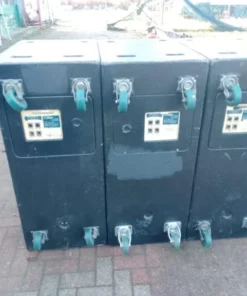
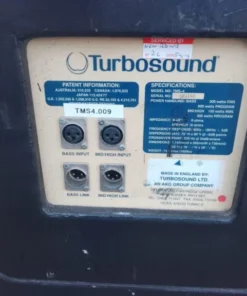
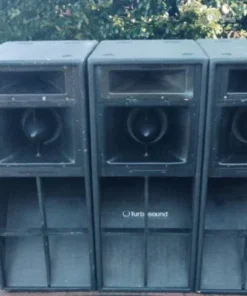
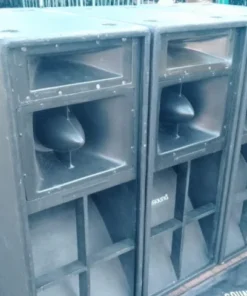
Turbosound TMS-4


€750.00
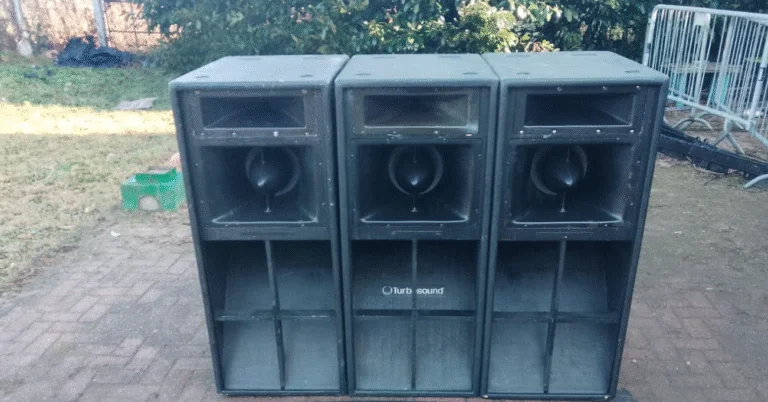
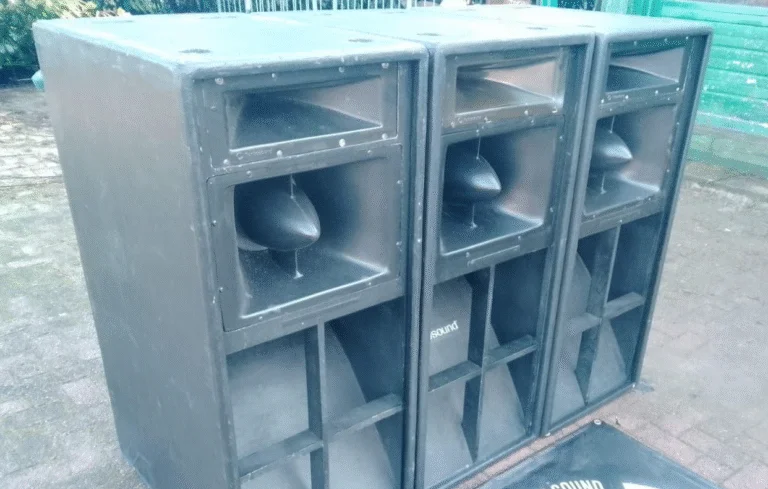
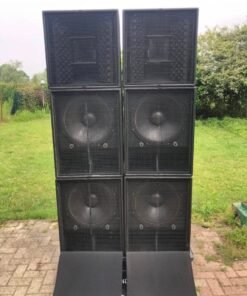
The Turbosound TMS-4 for sale is a classic 3-way bi-amped professional loudspeaker featuring an 18″ horn-loaded bass section, 10″ horn-loaded midrange and dedicated high-frequency compression driver. Built for powerful projection and professional sound reinforcement, the TMS-4 is ideal for clubs, live venues, touring systems, vintage PA projects and existing Turbosound installations.
Turbosound TMS-4 for Sale | Classic 3-Way Bi-Amp Professional Loudspeaker
The Turbosound TMS-4 for sale is a classic professional 3-way bi-amplified loudspeaker system built for high-output live sound, clubs, touring systems and fixed installations. Known for its horn-loaded architecture and distinctive classic Turbosound character, the TMS-4 combines dedicated low, mid and high-frequency sections in a substantial professional enclosure.
For buyers building or restoring vintage Turbosound systems, the TMS-4 remains an interesting option for applications where projection, efficiency and traditional horn-loaded performance are priorities.
Turbosound TMS-4 Specifications
| Specification | Details |
|---|---|
| Brand | Turbosound |
| Model | TMS-4 |
| Configuration | 3-way bi-amplified loudspeaker |
| LF Section | 18″ horn-loaded bass driver |
| MF Section | 10″ horn-loaded midrange |
| HF Section | 1″ compression driver |
| Frequency Range | Approx. 40 Hz – 17 kHz |
| Sensitivity | Approx. 105 dB SPL (1 W/1 m) |
| Maximum SPL | Up to approx. 135 dB peak |
| LF Impedance | 8 Ω |
| Mid/High Impedance | 16 Ω |
| Operation | Bi-amp |
| Cabinet | Heavy-duty plywood construction |
| Weight | Approx. 75 kg |
| Condition | Used professional equipment |
| Price | Contact for current price |
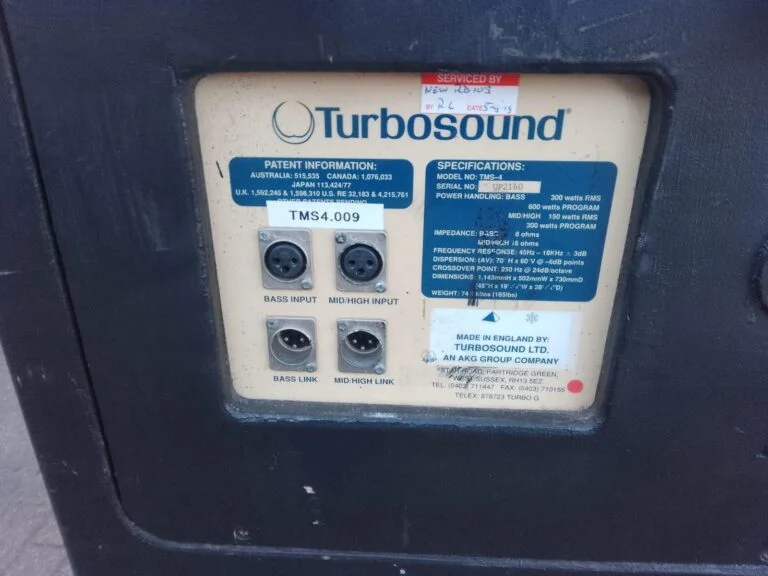
Exact specifications can vary according to cabinet generation and installed components, so the actual model plates and drivers should be checked when selling older TMS-4 equipment.
Classic 3-Way Turbosound Architecture
The TMS-4 combines three dedicated frequency sections:
18″ Low Frequency
The low-frequency section uses a large horn-loaded bass driver designed to provide efficient bass reproduction and strong projection.
10″ Midrange
A dedicated horn-loaded 10″ midrange driver handles the critical vocal and instrumental range.
1″ High Frequency
A compression driver provides the high-frequency section required for clarity and projection.
Together, these components create the characteristic three-way architecture associated with the TMS-4.
Bi-Amplified Operation
The traditional TMS-4 configuration is:
Bi-Amped
This means separate external amplifier channels are used for the low-frequency and mid/high-frequency sections.
The internal network handles the appropriate division between the mid and high sections, while an external crossover or DSP manages the separation between LF and mid/high.
This architecture gives professional engineers considerably more control than a simple full-range passive system.
Professional DSP Recommended
Modern digital loudspeaker processors can make integrating older TMS-4 cabinets into contemporary PA systems easier.
Depending on the exact cabinet configuration, processing may be used for:
- Crossover management
- EQ
- Delay
- Limiting
- Gain alignment
- Polarity
- Loudspeaker protection
Settings should be established for the actual drivers installed in the cabinets rather than copied blindly from another TMS-4 system.
High-Efficiency Horn-Loaded Design
One reason classic Turbosound systems remain interesting to professional audio enthusiasts is their extensive use of horn loading.
Rather than relying solely on direct-radiating drivers, the TMS-4 uses acoustic loading to improve efficiency and projection.
This makes the cabinet relevant for environments where substantial output is needed from a traditional passive professional PA.
Professional Power Handling
Approximate power-handling figures commonly associated with this configuration include:
| Section | Approximate Power Handling |
|---|---|
| 18″ LF | 300 W RMS / 600 W program |
| 10″ MF | 250 W RMS |
| 1″ HF | 50 W RMS |
For vintage equipment, however, amplifier selection should always be based on the specific drivers currently installed.
Older cabinets may have been reconed, repaired or reloaded during their service life, which can change the appropriate amplifier and limiter settings.
Strong Projection for Live Sound
The TMS-4 was created for professional applications where projection and efficiency matter.
It can be considered for:
Live music venues
Touring PA systems
Clubs
DJ systems
Theatres
Festivals
Vintage sound-system projects
and
Fixed installations
For applications requiring additional deep low-frequency extension, dedicated subwoofers can be incorporated into the system.
Large Professional Cabinet
The TMS-4 is substantial professional equipment rather than a compact portable PA speaker.
Approximate cabinet dimensions are around:
114 cm × 50 cm × 73 cm
with a weight of roughly:
75 kg / 165 lb
Exact measurements should be verified against the particular cabinets being offered.
Because of the size and weight, professional transportation equipment is recommended.
Classic Turbosound for Club Systems
Vintage Turbosound cabinets have developed a particular following among club and dance-music system owners.
The combination of horn-loaded bass and midrange reproduction makes the TMS-4 especially interesting for buyers looking to build a classic-style professional sound system rather than a modern compact powered-speaker setup.
Suitable for Existing Turbosound Systems
A TMS-4 can also be valuable for professionals already operating compatible older Turbosound equipment.
Potential uses include:
- Expanding an existing system
- Replacing matching cabinets
- Building a second system
- Restoring a vintage Turbosound rig
- Adding inventory for specialist rental
- Creating a permanent club installation
When combining cabinets from different sources, component compatibility should be verified.
Original vs. Replacement Components
For a used TMS-4 listing, it is important to tell buyers exactly what is installed.
If the cabinets contain all-original Turbosound components, that should be stated clearly.
If they have been fitted with Precision Devices, Fane or another manufacturer’s replacement drivers, those components should instead be identified by their actual model numbers.
This gives professional buyers the information they need to evaluate the system accurately.
Amplification Requirements
The TMS-4 requires external professional amplification.
A correctly designed setup should consider:
LF amplifier channel
Mid/high amplifier channel
Correct crossover
Limiter thresholds
Driver polarity
Time alignment
and
System EQ
A qualified audio engineer should configure the system if the exact processing requirements are unknown.
Condition of Used TMS-4 Cabinets
Because the TMS-4 is legacy professional equipment, condition matters considerably.
A good sales listing should provide current information about:
- Driver condition
- Reconing history
- Original/replacement components
- Cabinet condition
- Grilles
- Connectors
- Handles
- Internal crossover
- Serial numbers
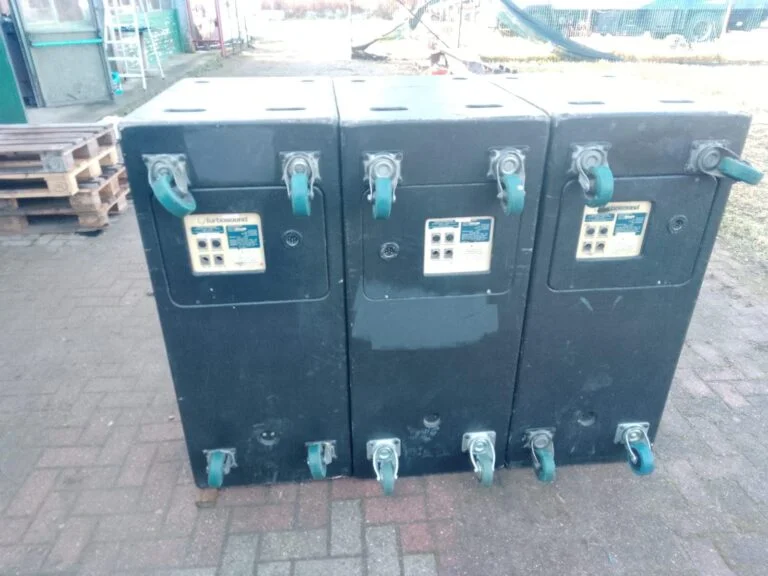
- Wheels or wheelboards
- Covers or flightcases
This helps buyers distinguish a well-maintained working pair from cabinets requiring restoration.
Why Buy a Turbosound TMS-4?
The TMS-4 offers something quite different from a modern lightweight active speaker.
Its appeal comes from its:
Classic Turbosound design
3-way architecture
Horn-loaded LF and MF sections
Bi-amplified operation
High sensitivity
and
Professional touring heritage
For buyers specifically interested in vintage professional PA, these characteristics can make a well-maintained TMS-4 system particularly desirable.
Frequently Asked Questions
Is the Turbosound TMS-4 a three-way speaker?
Yes. The TMS-4 is a three-way professional loudspeaker with dedicated low, mid and high-frequency sections.
Is the TMS-4 passive or active?
It is a passive professional loudspeaker and requires external amplification.
Does it require bi-amping?
The traditional TMS-4 configuration is bi-amplified, with external separation between the LF and mid/high sections.
What size bass driver does it use?
The classic configuration uses an 18″ low-frequency driver.
What is the approximate frequency range?
Approximately 40 Hz to 17 kHz, depending on the cabinet configuration, processing and installed components.
Can I use modern DSP with a TMS-4?
Yes. Modern professional DSP can be used for crossover, EQ, limiting and alignment, provided it is configured correctly for the actual drivers.
Is it suitable for club sound systems?
Yes. Classic Turbosound systems remain particularly interesting for clubs, live venues and specialist high-output sound-system installations.
Be the first to review “Turbosound TMS-4”
Related products
Complete System
Complete System
Complete System
Complete System
Complete System
D&B Audiotechnik
Complete System
Complete System
Reviews
There are no reviews yet.