
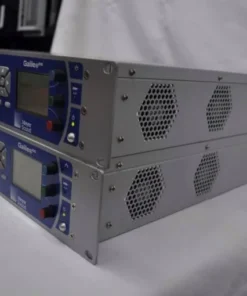
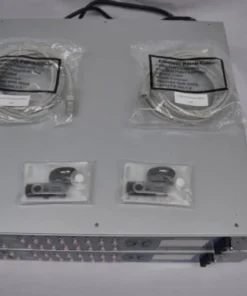
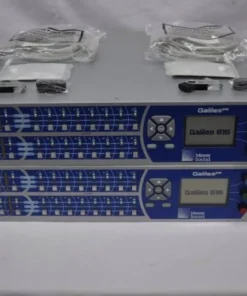
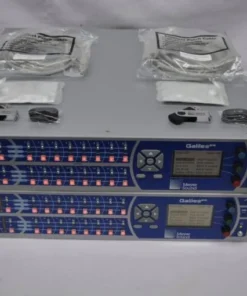
Meyer Sound Galileo 616 Processors

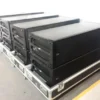
€2,000.00
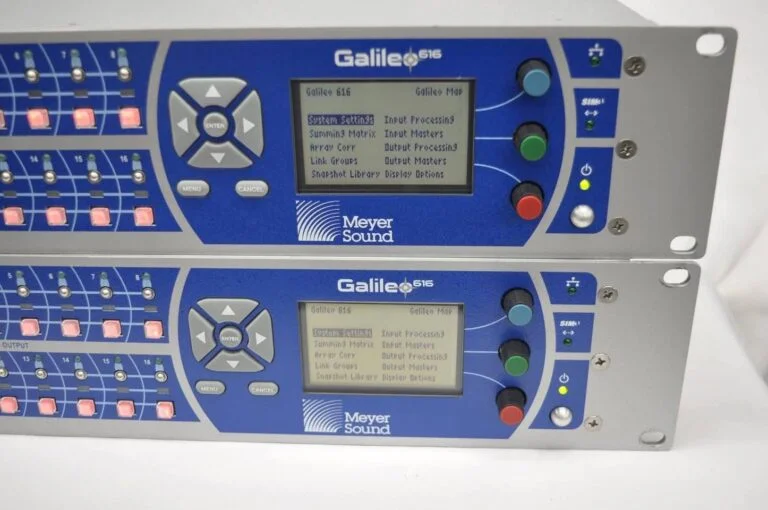
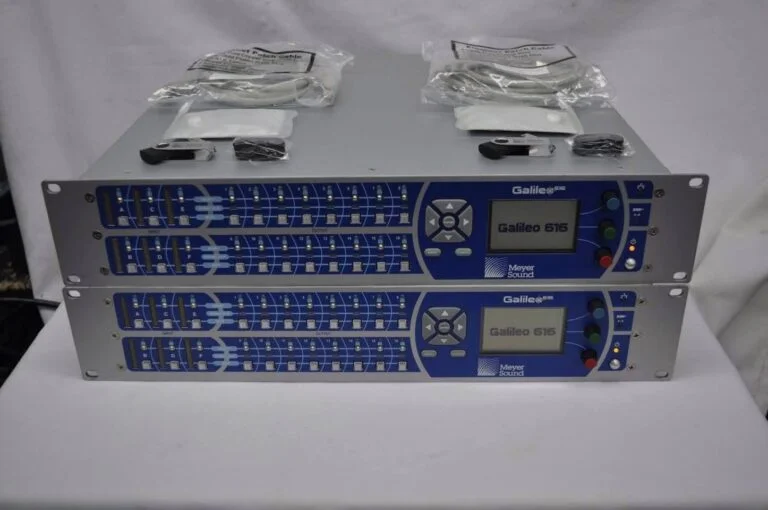
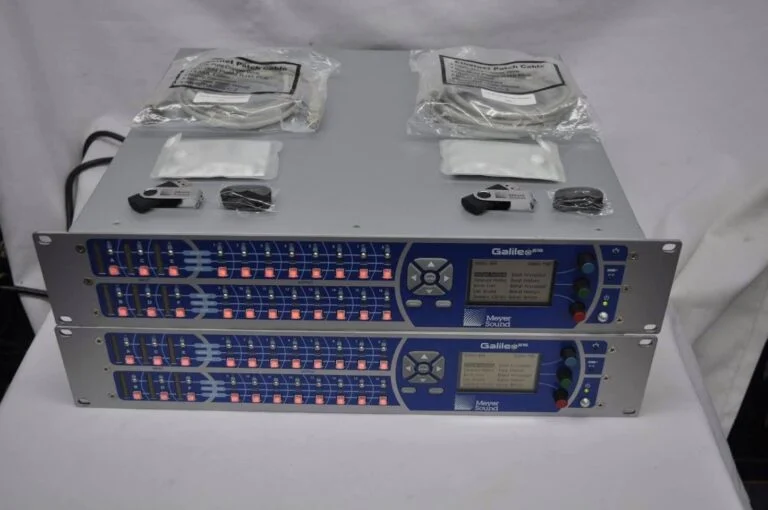
Take centralized control of complex Meyer Sound systems with the Meyer Sound Galileo 616 Processors for sale. This professional 6-input/16-output loudspeaker management platform combines 96 kHz DSP, full matrix routing, EQ, delay, array correction and Ethernet control through Compass. An excellent system-management solution for touring arrays, subwoofers and multi-zone professional installations.
Meyer Sound Galileo 616 Processors for Sale | 6×16 Loudspeaker Management
The Meyer Sound Galileo 616 Processors for sale provide professional system engineers with a powerful 6-input, 16-output loudspeaker management platform for controlling large Meyer Sound arrays, subwoofer systems and complex multi-zone installations. With 96 kHz processing, flexible 6×16 matrix routing, extensive EQ and delay tools, array correction and Ethernet control through Compass software, the Galileo 616 is designed for situations where precise system alignment matters as much as the loudspeakers themselves.
Rather than functioning as a simple crossover, Galileo 616 provides centralized control over a complete professional sound system. That makes it particularly relevant to touring companies, venues, rental businesses and existing Meyer Sound system owners.
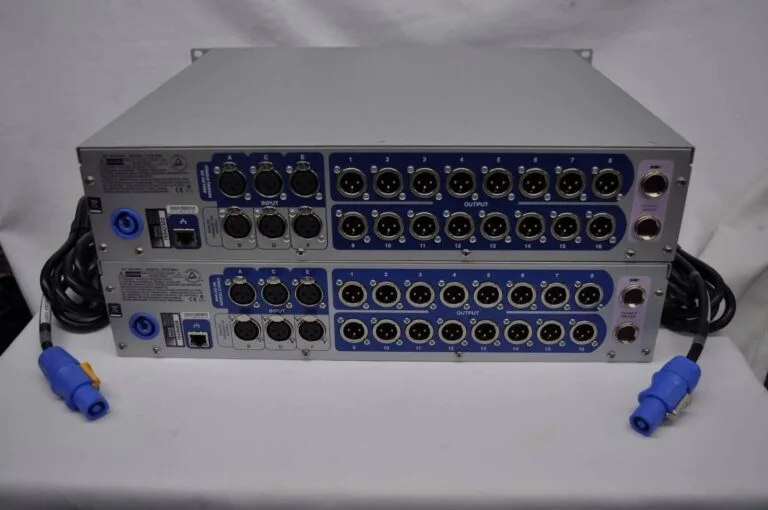
6 Inputs and 16 Outputs in One Processor
The defining configuration of the Galileo 616 is straightforward:
6 Inputs → 16 Outputs
This allows a relatively small number of source signals to be distributed and processed across a much larger number of loudspeaker zones.
| Specification | Details |
|---|---|
| Manufacturer | Meyer Sound |
| Model | Galileo 616 |
| Product Type | Digital loudspeaker processor |
| Inputs | 6 |
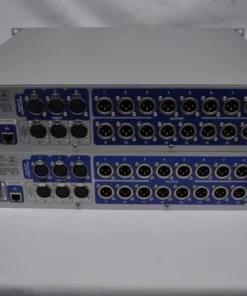
| Outputs | 16 analog XLR |
| Matrix | 6 × 16 full-summing |
| DSP Sample Rate | 96 kHz |
| Internal Processing | 32-bit floating point |
| Maximum Delay | Up to 2 seconds |
| Maximum Output Level | +26 dBu |
| Network Control | Ethernet |
| Control Software | Compass |
| Rack Format | 2U |
| Approx. Weight | 8.7 kg |
Why the Meyer Sound Galileo 616 Is More Than a Crossover
The Meyer Sound Galileo 616 Processors for sale should not be marketed merely as digital crossovers.
A crossover is only one part of what Galileo can do.
The processor provides system-level tools for:
- Signal routing
- Loudspeaker alignment
- Input and output EQ
- Delay management
- Array correction
- Subwoofer integration
- Atmospheric compensation
- Level management
- Polarity control
- Multi-zone distribution
For a complex professional PA, combining these functions into one centralized platform can significantly simplify system management.
Full 6×16 Matrix Routing
The Galileo 616 uses a flexible matrix architecture.
Any appropriate input can be routed to different combinations of the sixteen outputs, giving system engineers considerable freedom when designing a system.
For example, separate outputs may be assigned to:
Main arrays
Subwoofers
Front fills
Side fills
Delay systems
Balcony coverage
Secondary zones
The exact configuration depends on the venue and loudspeaker system.
96 kHz Digital Signal Processing
Professional loudspeaker management depends heavily on processing quality.
The Galileo 616 operates with 96 kHz digital processing, with the supplied specification indicating 32-bit floating-point internal processing.
This architecture provides the foundation for the processor’s extensive filtering, routing and system-alignment functions.
For professional system technicians, the important benefit is the ability to perform several processing operations within one coordinated platform.
Galileo 616 Input Processing
Each input provides tools for preparing and optimizing the incoming signal before it is distributed through the matrix.
Available processing includes functions such as:
- Gain
- Delay
- 31-band graphic EQ
- Parametric equalization
- TruShaping EQ
- Atmospheric correction
This gives engineers control at the system-input level before individual loudspeaker outputs receive their own processing.
Up to 2 Seconds of Delay
Delay is essential in large professional sound systems.
When loudspeakers are positioned at different distances from the audience, their acoustic arrival times differ.
The Meyer Sound Galileo 616 Processors for sale provide delay capabilities of up to approximately 2 seconds, allowing system engineers to address a wide variety of alignment requirements.
This can be especially useful for large venues with distributed delay systems.
Output Processing for Individual Loudspeaker Zones
The sixteen outputs provide extensive processing options.
These can include:
Gain control for balancing system sections.
Delay for time alignment.
Polarity control for correct system integration.
Parametric EQ for response optimization.
High-pass and low-pass filters for system bandwidth management.
Array correction for supported Meyer Sound systems.
This allows each output zone to be treated according to its specific acoustic role.
Designed for Meyer Sound Array Systems
One of Galileo 616’s strongest advantages is its relationship with Meyer Sound professional loudspeaker systems.
Rather than functioning only as a generic processor, Galileo incorporates tools intended to support Meyer Sound array deployment and system optimization.
This makes the processor particularly attractive to companies already operating Meyer Sound equipment.
Existing owners may use Galileo to manage systems involving professional array loudspeakers, fills and subwoofers within one coordinated control environment.
Array Correction and System Optimization
Large loudspeaker arrays behave differently from individual cabinets.
As the number of loudspeakers and array geometry change, the overall acoustic behavior of the system also changes.
Galileo’s processing tools allow professional technicians to apply appropriate system correction as part of the tuning process.
This is particularly valuable for touring applications because the same loudspeaker inventory may be configured differently from one venue to another.
Atmospheric Compensation
Sound travelling over substantial distances is affected by atmospheric conditions, particularly at higher frequencies.
The Galileo platform includes atmospheric compensation tools that can assist engineers when optimizing long-throw professional systems.
This is especially relevant for:
- Outdoor concerts
- Festivals
- Arenas
- Large halls
- Long-throw arrays
Atmospheric correction should still be applied based on actual system measurements and environmental conditions.
TruShaping Equalization
The Galileo 616 also provides Meyer Sound’s TruShaping equalization tools.
These controls give system engineers another method for shaping overall tonal response without relying exclusively on conventional parametric filters.
For a product page, this feature helps differentiate Galileo from generic 6-in/16-out processors.
Ethernet Control with Compass Software
A large sound system can involve processors located far from the mixing position.
Walking between front of house and amplifier or processing racks for every adjustment would be inefficient.
Galileo addresses this through Ethernet-based remote control using Compass software.
Technicians can manage compatible processor functions from a connected computer, making system setup and monitoring much more practical in large venues.
Front-Panel Control When You Need It
Remote control is useful, but the processor does not depend entirely on an external computer for basic interaction.
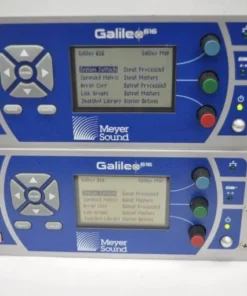
The front panel provides direct access through its display and controls.
This gives technicians another way to inspect or adjust the processor locally when working directly at the equipment rack.
Galileo 616 and SIM 3 Workflows
For professional Meyer Sound users working with measurement systems, Galileo was also designed to integrate with SIM 3 measurement workflows.
Measurement-based system tuning is important because professional PA optimization should not depend entirely on listening impressions.
Engineers can use measurements to evaluate timing, frequency response and system interaction before applying appropriate corrections.
Meyer Sound Galileo 616 for MILO Systems
The Meyer Sound Galileo 616 Processors for sale are particularly relevant alongside established Meyer Sound touring inventories.
For example, businesses operating MILO, MICA or other compatible Meyer Sound systems may require centralized system processing for array alignment, subwoofer integration and output distribution.
This makes Galileo 616 a logical product to cross-link internally from your Meyer Sound loudspeaker listings.
A Natural Companion to Large Meyer Sound Packages
A professional Meyer Sound inventory may contain:
main array cabinets, subwoofers, fills, delay speakers and several system zones.
Galileo can provide centralized routing and processing between these different sections.
This means buyers looking at large Meyer Sound packages may also have genuine purchasing intent for Galileo processors, especially when building a complete system rather than buying isolated cabinets.
Professional Subwoofer Management
Low-frequency system integration is another important application.
High-pass and low-pass filtering, delay, polarity and level management allow technicians to integrate compatible subwoofer systems with the main PA.
For large systems, accurate subwoofer alignment can have a significant effect on overall system performance.
The Galileo platform gives engineers the processing tools needed to perform this work within the broader system configuration.
Meyer Sound Galileo 616 for Touring
Touring is one of the strongest applications for this processor.
A touring company may use the same loudspeaker inventory in a theatre one evening and a much larger event space later in the tour.
System configuration must therefore adapt quickly.
The Galileo 616 can store and manage the processing required for complex professional systems while providing network-based access to important parameters.
Useful for Permanent Installations
The processor is equally relevant to fixed professional environments.
Typical applications can include:
- Concert venues
- Theatres
- Houses of worship
- Corporate AV facilities
- Entertainment venues
- Large event halls
- Performing arts centres
- Professional multi-zone installations
Sixteen outputs make the processor particularly useful when several independently controlled loudspeaker zones are required.
Compact 2U Rack Format
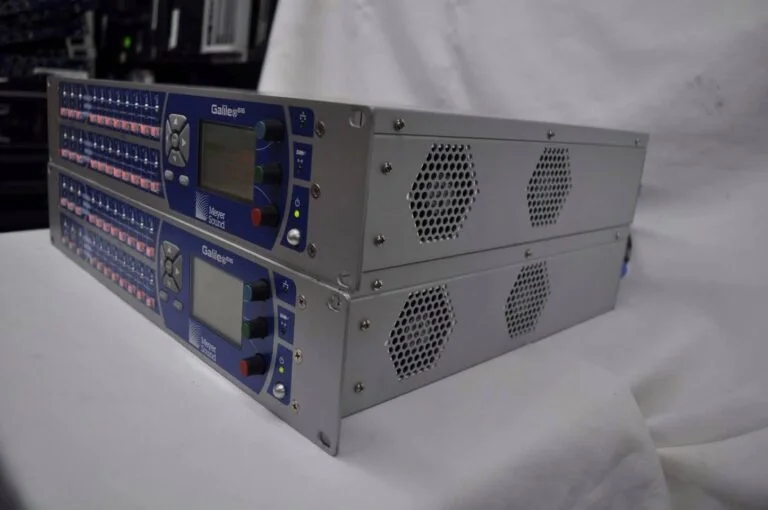
Despite providing sixteen outputs and extensive processing, the Galileo 616 fits into a 2U rack space.
That helps keep professional processing racks manageable.
The supplied weight is approximately 8.7 kg, making it considerably easier to integrate into touring racks than a collection of separate processors performing individual tasks.
Condition, Quantity and Price
No specific condition, selling price or available quantity was provided for these Galileo 616 processors.
Therefore, I would avoid inventing statements such as “excellent condition,” “fully tested,” or “like new.”
For this listing:
Condition: Contact for details
Quantity: Contact for availability
Price: Contact for current price
These can be updated once you have the exact inventory information.
Buy Meyer Sound Galileo 616 Processors in Europe
Professionals searching for Meyer Sound Galileo 616 Processors for sale in Europe can use this platform to manage complex Meyer Sound reinforcement systems requiring extensive routing, equalization, delay and array control.
With six inputs, sixteen outputs, 96 kHz DSP, 6×16 matrix routing and Ethernet-based Compass control, Galileo 616 remains particularly relevant to established Meyer Sound systems where centralized professional processing is required.
Shipping can be arranged to supported destinations throughout Germany, the Netherlands, France, Italy and other European markets.
Frequently Asked Questions
How many inputs does the Galileo 616 have?
The processor provides six input channels.
How many outputs are available?
There are 16 analog outputs, giving the system its 6-in/16-out architecture.
What sample rate does the Galileo 616 use?
The supplied specifications state 96 kHz processing.
Can any input be routed to multiple outputs?
Yes. Its flexible 6×16 matrix allows signals to be distributed across different output combinations.
Does Galileo 616 provide EQ?
Yes. The processor includes extensive input and output equalization tools, including parametric processing and Meyer Sound-specific functions.
Can it manage system delay?
Yes. Delay of up to approximately 2 seconds is available according to the supplied specifications.
Can Galileo 616 control subwoofer feeds?
Yes. Its filtering, delay, polarity, routing and level functions make subwoofer management an important application.
Can the processor be controlled remotely?
Yes. Ethernet connectivity allows compatible remote control through Compass software.
Is it suitable for Meyer Sound line-array systems?
Yes. Large Meyer Sound arrays and multi-zone professional systems are among its primary applications.
Be the first to review “Meyer Sound Galileo 616 Processors”
Related products

Complete System
D&B Audiotechnik
Complete System
Complete System
Complete System
D&B Audiotechnik
Complete System
Complete System
Reviews
There are no reviews yet.